AI TOOL / #05842
JobLander
An AI assistant for real-time transcription, summarization, and action item extraction during calls.
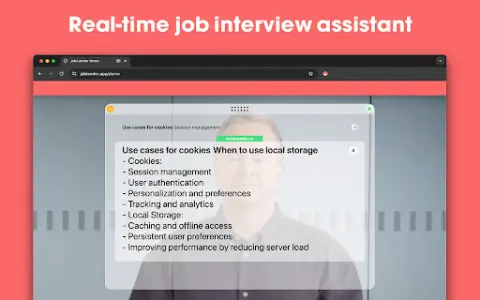
Introduction
AI assistant for real-time transcription, summarization, and action item extraction during calls.
What is an AI-powered real-time call assistant Chrome extension/plugin?
This smart real-time call assistant is designed to enhance communication during Google Meet, Zoom, and MS Teams calls. It provides real-time transcription, summaries, and action item extraction to help users stay focused and productive in meetings. The assistant can also provide real-time feedback on speaking style and clarity to ensure effective communication.
How do I use the AI-powered real-time call assistant AI Chrome extension/plugin?
The AI assistant integrates directly with Google Meet, Zoom, and MS Teams. Once installed, it automatically joins calls and starts transcribing and analyzing conversations. Users can get summaries, action items, and speaking style feedback directly in the meeting interface or after the call ends.
Core features of the AI-powered real-time call assistant AI Chrome extension/plugin
Real-time transcription
Real-time summary
Action Item Extraction
Speaking Style Analysis and Feedback
Related
Douban Reading
Book rating and reviews
Chrome App Store
Google Chrome extensions
Beginner Tutorial
Programming Introduction Tutorial
Steam
game platform
IvyCraft AI content generation platform
IvyCraft is an AI content generation platform. Upload existing data such as PDF, Word, and web pages to generate PPT, infographics, podcasts, and videos based on the original content. It also supports the creation of comics, picture books, and social media content. The generated PPT and infographic can be continued
Ask Academic-Academic Edition codex
Programmers have been completely changed by Codex. Instead of typing out code line by line, they can throw requirements to AI and let it write code, run tests, fix bugs, and deliver in a closed-loop. So here comes the question: isn’t the work that scientific researchers do every day “configuring environments, running experiments, copying codes, and checking